Uneven wear in plastic shredder blades is rarely caused by blade material alone. In most recycling operations, the wear pattern is closely related to rotor-to-counter-knife clearance, inconsistent feeding, contamination such as metal or mineral particles, and operating conditions. When these factors are not controlled, some cutting edges deteriorate much faster than others, reducing throughput and increasing the frequency of blade replacement.
For processors using single-shaft shredder blades, maintaining a stable cutting gap and consistent feed is particularly important because the blades repeatedly engage with material against a fixed counter knife. Even high-quality shredder blades for plastic can develop abnormal wear when the mechanical conditions are poorly controlled.
How Does Clearance Affect Plastic Shredder Blade Wear?
Clearance determines how effectively the rotor blades and counter knives cut the incoming plastic. If the gap is too large, the material may be dragged, compressed, or torn instead of being cleanly cut. This increases friction and can accelerate edge rounding.
If the clearance is too small, the cutting edges can experience excessive contact, particularly when the machine contains hard contaminants or when thermal expansion changes the relationship between components. Localized contact can produce chipping, deformation, or rapid wear on specific sections of the blade.
The correct clearance therefore depends on the machine design, blade geometry, material being processed, and manufacturer specifications rather than a universal fixed value.
Why Does Feed Contamination Cause Uneven Wear?
Contamination is one of the most common reasons for irregular blade deterioration. Plastic waste can contain metal fragments, stones, glass, sand, screws, staples, or other hard foreign matter. These materials impose much higher loads on the cutting edge than normal plastic feedstock.
The effect is often localized. A contaminant may repeatedly pass through the same part of the cutting chamber, causing one section of the plastic shredder knives to become dull or chipped while other sections remain relatively sharp.
Feed consistency also matters. Large differences in material thickness, density, and hardness can change the cutting load across the rotor. For this reason, sorting and pre-processing are not simply quality-control measures; they directly influence blade service life.
What Causes Some Shredder Blades to Wear Faster Than Others?
Uneven wear can result from several interacting mechanical factors. Rotor alignment, bearing condition, counter-knife positioning, feed distribution, blade installation, and machine loading can all influence how force is transferred through the cutting system.
Blade rotation patterns can also create different wear rates. If material consistently enters from one side of the hopper, certain cutting zones may receive a greater share of the workload. A worn or incorrectly positioned counter knife can further concentrate pressure on particular blade edges.
For plastic shredder blades, inspecting the complete cutting system is therefore more useful than evaluating individual blades in isolation.
How Can Operators Identify Abnormal Blade Wear?
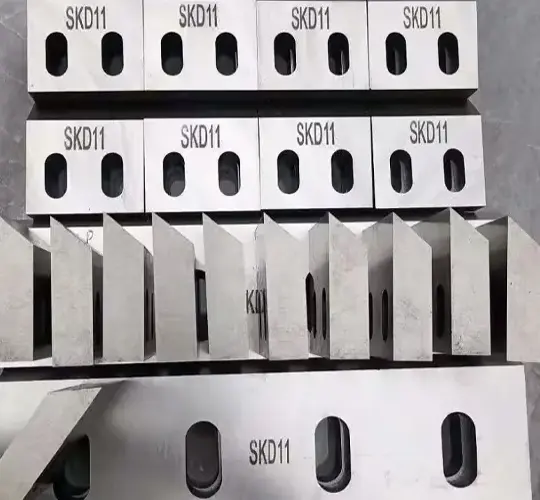
The wear pattern often provides clues about the underlying problem. Uniform rounding along the cutting edge generally indicates normal abrasive wear, while isolated chips, deep notches, or sharply different wear rates between adjacent blades may indicate contamination, clearance problems, or misalignment.
Operators should monitor several indicators together:
Increasing motor load or power consumption
Lower throughput at the same operating conditions
Larger or inconsistent output particle size
Increased vibration or abnormal noise
Visible chipping or deformation
Significant differences in edge condition between blades
Recording these changes over several production cycles helps distinguish normal blade life from abnormal mechanical wear.
When Should Plastic Shredder Blades Be Replaced?
Replacement should not be based only on operating hours. A blade may still have sufficient usable material but perform poorly because its cutting geometry has deteriorated. Conversely, replacing blades too early can increase operating costs unnecessarily.
For many industrial shredders, the practical replacement point is reached when maintaining the required output becomes difficult despite appropriate clearance adjustment and machine settings. If blades are designed for sharpening, the remaining blade thickness, grinding allowance, and original cutting geometry should also be considered.
For single shaft shredder blades, planned inspection and scheduled sharpening can often provide more predictable maintenance costs than waiting for a severe drop in cutting performance.
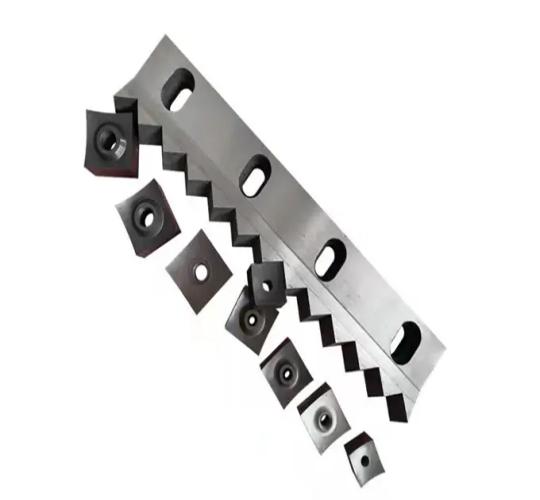
How Does Blade Quality Affect Shredder Blades Price and Replacement Cost?
Shredder blades price should be evaluated together with service life, sharpening capability, cutting performance, and downtime rather than as a standalone purchasing figure.
A lower-priced blade may appear economical initially, but frequent replacement can increase total cost through labor, machine downtime, shipping, and production interruptions. A higher-performance blade may have a higher initial purchase price while providing longer service intervals under the same operating conditions.
Material selection also needs to match the application. Factors such as plastic type, contamination level, impact load, cutting speed, and expected service life should be considered when selecting blade steel, hardness, heat treatment, and blade geometry.
The most useful purchasing comparison is therefore the cost per production cycle or processed ton, not simply the price of one blade.
How Can Blade Life Be Extended in Plastic Shredding?
Longer blade life starts with controlling the conditions that cause abnormal wear. Keep the feedstock as free from metal and mineral contamination as practical, avoid excessive overloading, and maintain the recommended rotor-to-counter-knife clearance.
Regular inspection is equally important. Checking blade edges, counter knives, rotor condition, fasteners, bearings, and alignment can identify problems before they create secondary damage.
For operations with demanding recycling conditions, selecting application-specific plastic shredder blades and maintaining the complete cutting system is generally more effective than relying on blade replacement alone. Langyemt's plastic shredder blades are designed for industrial plastic shredding applications where cutting stability and wear resistance are important considerations.
Conclusion
Uneven wear in plastic shredders is usually a system problem rather than a simple blade-quality problem. Incorrect clearance, contaminated feedstock, uneven material distribution, alignment issues, and excessive loading can all concentrate cutting forces on specific blade areas.
Monitoring wear patterns, controlling feed contamination, maintaining the correct cutting gap, and evaluating replacement cost by actual production performance can significantly improve maintenance planning. When selecting single shaft shredder blades or other plastic shredder knives, the appropriate material, geometry, and service-life expectations should be matched to the actual operating environment.
FAQs
What is the main cause of uneven wear on plastic shredder blades?
Uneven clearance, contaminated feedstock, misalignment, and uneven material distribution are common causes.
Can contaminated plastic damage shredder blades?
Yes. Metal, stones, glass, and other hard contaminants can cause rapid edge wear, chipping, or deformation.
How often should shredder blades be replaced?
There is no universal replacement interval. Replacement should be based on blade condition, cutting performance, output quality, and the remaining allowance for sharpening.
Are more expensive shredder blades always better?
Not necessarily. Blade value depends on material quality, application suitability, service life, sharpening capability, and total operating cost.
How can blade service life be extended?
Maintain proper clearance, control feed contamination, avoid overloading, inspect the cutting system regularly, and use blades suited to the specific plastic and operating conditions.
 English
 日本語
日本語 한국어
한국어 français
 Deutsch
 Español
 русский
 Türkçe
 português
 العربية
 Polska
 हिंदी
हिंदी Indonesia