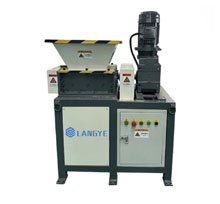
Gerald Kincer, vice president of plastics sales for Langye, provides insights into the distinctions and applications of single-shaft shredders compared to dual-shaft models. This article addresses common questions about their functionality, use cases, material compatibility, sizing considerations, and key purchasing factors, offering a comprehensive guide for those exploring these machines.
What Are the Differences Between Single- and Dual-Shaft Shredders?
The primary distinction between single- and dual-shaft shredders lies in their rotor configuration: single-shaft shredders feature one rotor, while dual-shaft shredders have two. Single-shaft models operate at variable speeds, providing flexibility to adapt to different materials and processing needs, whereas dual-shaft shredders maintain a consistent slower speed with higher torque for robust material handling. The shredding mechanism also differs—single-shaft shredders employ a hydraulic ram to press materials against a rotor equipped with sharp blades and a stationary counter knife, slicing them precisely. In contrast, dual-shaft shredders use two interlocking rotors to pull and tear materials apart. Additionally, single-shaft shredders are equipped with sizing screens to produce uniform particle sizes, making them ideal for applications requiring consistency, while dual-shaft shredders are better suited for tasks where uniformity is less critical.
What Industries Typically Use Single-Shaft Shredders and How Are They Used?
Single-shaft shredders are widely employed in industries such as plastics, wood, paper, and waste management, where size reduction is a critical initial step in recycling processes. In the plastics sector, these shredders process production scrap, which can be reused in manufacturing or sold in the market. The wood industry utilizes them to break down materials for applications like animal bedding or further processing. In the waste-to-energy sector, single-shaft shredders transform materials into refuse-derived fuel, powering furnaces and incinerators. Their versatility makes them essential tools for streamlining recycling and waste management across various industries.
What Materials Can a Single-Shaft Shredder Process and What Materials Are a Struggle?
Single-shaft shredders excel at processing a wide range of materials, including rigid and soft plastics, films, fibers, wood, composite materials, paper, and municipal or industrial waste. However, they are not well-suited for handling metals, particularly in large quantities, as significant metal content can damage the machine. While small amounts of tramp metal can typically be managed with built-in safeguards that ensure clean output, processing metal-heavy material streams requires caution. To confirm compatibility with specific materials, conducting a test run or consulting an equipment expert is recommended.
How Do I Determine the Right Size and Configuration of a Shredder for My Application?
Selecting the appropriate size and configuration for a single-shaft shredder begins with understanding the material's composition, type, form, and input size, as these factors significantly influence performance. Throughput requirements and input size are closely interconnected—a smaller machine may suffice for larger output particle sizes at the desired throughput, but producing smaller particles at the same rate often necessitates a larger shredder. Additionally, consider the material's downstream processing needs, as compatibility with subsequent equipment can influence the shredder's configuration to ensure seamless integration into the overall workflow.
What Factors Should I Consider When Purchasing a Single-Shaft Shredder?
When purchasing a single-shaft shredder, prioritize quality in both construction and performance to ensure reliability and longevity. Opt for a reputable vendor like Langye, known for robust after-sales support to minimize operational disruptions. Safety features are crucial, including overload protection, amp-load detection, and emergency stop mechanisms to safeguard operators and equipment. Maintenance-friendly designs, such as accessible doors and quick access to wear parts, help reduce downtime and simplify upkeep. Consider specific operational needs, such as protection against tramp metal, hard-faced rotors for abrasive materials, or cooling systems for heat-generating processes. Consulting with an expert can clarify these requirements, ensuring the shredder aligns perfectly with your application.
 English
 日本語
日本語 한국어
한국어 français
 Deutsch
 Español
 русский
 Türkçe
 português
 العربية
 Polska
 हिंदी
हिंदी Indonesia