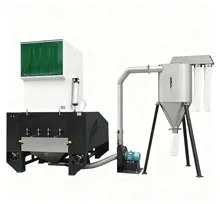
Single-shaft shredders are vital for processing large volumes of waste materials, including industrial waste, wood, plastics, rubber, tires, paper, agricultural waste, and light metals like aluminum. The blades within these machines are critical components, with their quality and design directly influencing efficiency and processing cycles. This article explores the materials, designs, and features that make these blades essential for the recycling and waste processing industry, emphasizing their role in achieving optimal and sustainable performance.
The Importance of Blades in Single-Shaft Shredders
Industrial blades are the cornerstone of a single-shaft shredder's functionality and efficiency, enabling effective and consistent waste breakdown. High-quality, well-designed blades ensure uniform cutting, which maximizes the machine's capacity and reduces processing time. Their adaptability allows shredders to handle diverse materials, such as plastics, rubber, aluminum, and wood, expanding their application range. Durable blades, crafted from robust materials, resist wear, minimizing the need for frequent replacements and lowering operational costs. Additionally, precise cuts enhance the quality of the final product, facilitating recycling, compacting, or disposal processes, and supporting sustainability and the circular economy by transforming bulky waste into manageable fragments.
Main Features
Blades for single-shaft shredders are distinguished by their strength, precision, and durability, which are crucial for processing materials like wood, plastics, rubber, and agricultural waste. Unlike blades in two- or four-shaft shredders, which rely on synchronized rotor motion, single-shaft blades utilize a rotary design that efficiently cuts and fragments waste. Constructed from hardened steels or high-chromium alloys, these blades withstand abrasion and wear during intensive use. Their edge designs, whether straight or serrated, are tailored to specific materials for precise and efficient cuts. The blades' adaptability allows them to process various waste types, and their simpler structure compared to multi-shaft systems makes maintenance and replacement straightforward.
Single-Shaft vs. Two- and Four-Shaft Shredders: Key Differences
The choice between single-shaft, two-shaft, or four-shaft shredders depends on the material type and recycling or waste treatment goals. Single-shaft shredders feature a single rotor that cuts materials against a fixed counter blade, making them ideal for versatile applications and less compact materials. Their economical and simple design simplifies maintenance. In contrast, two-shaft shredders use two synchronized rotors to process tougher materials, such as metal scrap or large tires, requiring more robust blades. Four-shaft shredders combine two main and two secondary rotors for enhanced size reduction and material separation, suitable for complex materials like electronic waste or mixed plastics and metals.
Advantages of Blades for Single-Shaft Shredders
Blades designed for single-shaft shredders offer exceptional wear resistance, thanks to premium materials like hardened steel, ensuring longevity even under demanding conditions. Their optimized edge designs deliver clean and uniform cuts, streamlining subsequent recycling or disposal processes. The simplicity of single-shaft shredder designs results in lower maintenance costs compared to more complex multi-shaft systems, making them a cost-effective choice for efficient material processing.
Blade Materials for Single-Shaft Shredders
The selection of blade materials for single-shaft shredders is crucial for ensuring durability, resistance, and efficiency under rigorous conditions. Hardened steel is commonly used for its balance of durability and wear resistance, ideal for abrasive materials like reinforced plastics or rubber. High-chromium alloy steels provide superior resistance to abrasion, making them suitable for processing materials like aluminum or metal composites. Tungsten carbide coatings enhance edge durability, extending blade lifespan in extreme applications. Stainless steel, though less common, is used for corrosion resistance in applications involving wet agricultural waste. Treatments like tempering and annealing increase hardness and mechanical strength, while anti-wear coatings, such as tungsten carbide or advanced ceramics, further enhance performance under high-abrasion conditions.
Manufacturing Blades for Leading Brands
At Langye, we produce custom blades for single-shaft shredders tailored to specific client and application needs. Our expertise allows us to create blades compatible with leading shredder brands. We offer a variety of steel grades and hardness levels, optimized based on factors like material type, cleanliness, format, or machine condition. Our custom designs maximize blade lifespan and reduce operational costs. Through precise thermal treatments and finishes, we ensure exceptional resistance to wear and abrasion, positioning Langye as a trusted partner for companies seeking reliable, durable solutions for waste material processing.
 English
 日本語
日本語 한국어
한국어 français
 Deutsch
 Español
 русский
 Türkçe
 português
 العربية
 Polska
 हिंदी
हिंदी Indonesia