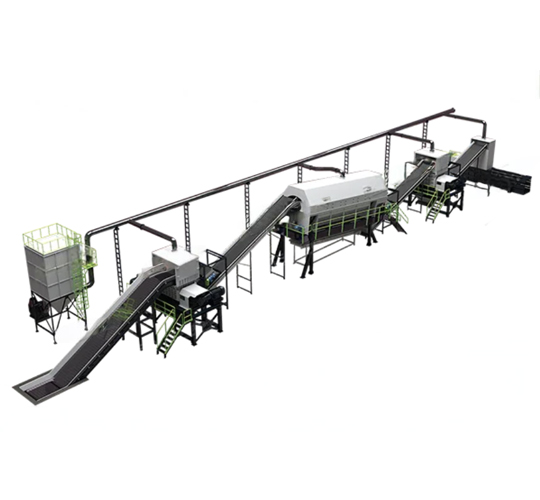
Key factors to consider when selecting a plastic film system include material compatibility, production capacity, energy efficiency, installation, and maintenance requirements. Most importantly, choosing excellent shredding equipment for pre-treatment can make the pelletizing system even more efficient. Langye Environmental's recycling system stands out, and its detailed introduction is below.
Pretreatment: Lays the foundation for efficient film shredding
Shredding and cleaning systems are the core of the front-end process for plastic film recycling. High-quality pretreatment directly impacts the stability of the film recycling system and the quality of the output pellets. Pretreatment steps and key equipment include:
1. Shredding: Cuts bulk material into smaller, more uniform pieces. Film-type materials are opened to allow for effective cleaning and washing.
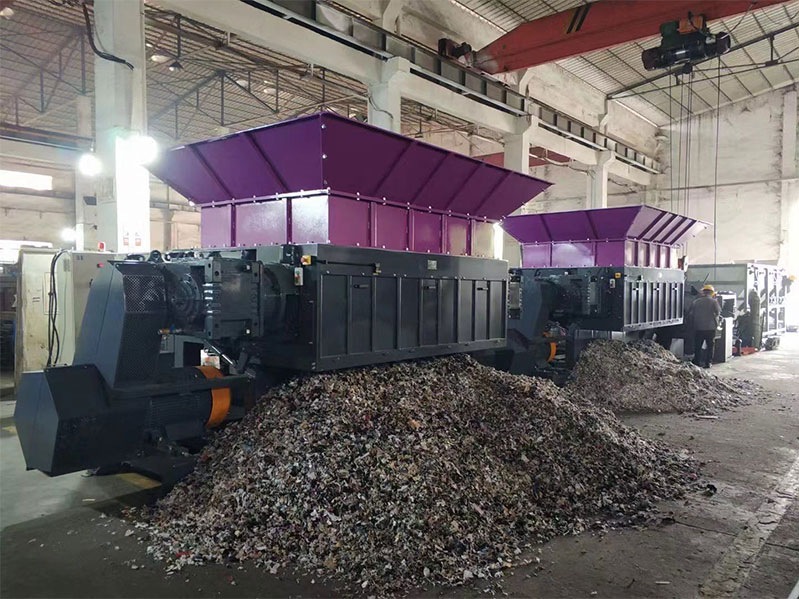
Langye Environmental Protection LYHS Series Pre-Crusher: A low-speed, high-torque, low-dust, and low-noise machine suitable for film, rigid plastics, and bulky materials.
Langye Environmental Protection LYH Series Single-Shaft Shredder for sale: A small- to medium-sized shredder suitable for processing a variety of materials into uniform particle sizes.
2. Crushing: Further reduces particle size for consistent feed.
Langye Environmental Protection HG Series Crusher: A high-speed crusher suitable for processing a variety of materials, including plastics, rubber, fiber, cable, and more.
3. Cleaning and Drying: Essential for contaminated and impure materials. The pre-wash system efficiently removes most impurities such as silt, protecting subsequent equipment and significantly extending the service life of the crushing and cleaning systems.
The high-speed centrifugal cleaning system optimizes the rotation speed and blade impact force for different materials to achieve optimal cleaning results.
The drum in the cleaning tank features a high-pressure underwater cleaning design to maximize the removal of residual impurities. The claw-type uniform discharge ensures uniform discharge while controlling moisture content, providing a process foundation for the dehydration module.
The thin-film drying technology, which combines centrifugal dehydration, screw drying, and high-temperature hot air, strictly controls the moisture content of the finished product to less than 5%, meeting the requirements of high-quality granulation.
Choosing a Film Recycling System: Matching Material Requirements
Plastic pelletizing is a plastics processing process in which pre-crushed plastic is melted at high temperatures and reformed into uniform, stable, and standardized recycled plastic pellets, typically cylindrical or spherical.
The type of plastic material significantly influences the choice of pelletizer. Common plastics include:
Polyethylene (PE)
Polypropylene (PP)
Polyvinyl chloride (PVC)
Polystyrene (PS)
Technical plastics (ABS, nylon, etc.)
Each material has different melting points, viscosities, and handling requirements. Therefore, the selected pelletizer must be compatible with the plastic being processed.
Technical Parameters to Consider
When comparing different pelletizing systems, it is recommended to consider the following technical parameters:
Production capacity
Discharge diameter (customizable)
Speed
Temperature range
Heating and cooling requirements
Operational efficiency
Energy savings
Maintenance costs
Why Langye Environmental Protection Stands Out
Choosing the right supplier is just as important as choosing the right plastic recycling equipment. Langye Environmental Protection stands out because of:
In recent years, we have been committed to improving product quality and elevating service standards. Our efforts have gained recognition in the global market, attracting an increasing number of machinery distributors to partner with us in expanding local market presence. Our achievements speak for themselves, with recent sales growth reaching an impressive 50%.
We warmly welcome distributors worldwide to engage in mutually beneficial collaboration. Let us join hands to create shared success and achieve win-win outcomes.
 English
 日本語
日本語 한국어
한국어 français
 Deutsch
 Español
 русский
 Türkçe
 português
 العربية
 Polska
 हिंदी
हिंदी Indonesia